What You’ll Learn
Curious? Read on and learn the lean way to join an industry that pulled in $10.74 billion in U.S. iGaming revenue during 2025.
In the next few minutes you will discover:
-
The seven core steps that lower cost and compliance risk
-
How turnkey casino platform and white label models compare
-
Real-world stories of small brands that scaled quickly
-
Key numbers, links, and checklists you can save for later
Follow the sections in order or jump straight to the step holding you back.
How to Start an Online Casino with Minimal Risk?
To start an online casino with minimal risk, you need to begin by researching market demand and identifying your target audience. From there, select a licensing jurisdiction that aligns with your budget and timeline, and decide whether a white label or turnkey platform best suits your operational goals.
Next, integrate multiple game providers along with a live casino feed to ensure a diverse offering. It is also essential to implement a range of payment options, including cards, e-wallets, and cryptocurrencies, supported by proper risk management tools. Building a mobile-first website, along with a strong loyalty program and responsible gaming features, helps create a sustainable user experience. Once everything is in place, you can launch the platform, promote it effectively, and continuously optimize performance using real-time data.
Validate Your Market Opportunity
Entering a fast-growing market can be highly attractive, but relying on guesswork rarely leads to success. A more effective approach begins with analyzing real revenue trends. For example, U.S. commercial gaming reached $71.92 billion in 2024, growing 7.5% year-over-year , while iGaming alone increased by 28.7% to $8.41 billion in the same year. Looking beyond the U.S., remote gambling in Great Britain generated £6.5 billion in gross yield, according to the UK Gambling Commission. These figures provide a grounded perspective on where the market is growing and how different regions compare.
After reviewing the data, the next step is to define a clear niche. Instead of trying to appeal to everyone, it is more effective to focus on a specific audience, such as Gen Z players interested in slots, retirees who prefer classic table games, or users drawn to esports-style crash games. Tools like keyword research platforms, online forums, and competitor analysis can help identify real demand and user preferences.
A lean financial model is equally important. This involves outlining initial setup costs such as licensing, platform development, marketing, and staffing. From there, you should estimate monthly revenue using conservative conversion rates and plan for at least a six-month period without profit. Careful financial planning, combined with solid market research, helps eliminate unrealistic assumptions and ensures resources are used efficiently before launching.
Pick the Right Jurisdiction and License
A license determines key aspects of your online casino, including tax obligations, compliance requirements, access to banking services, and overall player trust. Choosing the right jurisdiction is therefore a strategic decision rather than just a regulatory step. Common entry points include Curaçao, which offers a fast and low-cost setup that works well for crypto-focused operations but carries a weaker brand perception. The Malta Gaming Authority (MGA) provides a mid-priced option with strong credibility across Europe, while jurisdictions such as Ontario or New Jersey involve higher fees but deliver robust access to the North American market and stronger regulatory trust.
Hidden Costs to Budget
In addition to the licensing choice itself, it is important to account for hidden costs that can significantly impact your budget. These include application and annual licensing fees, requirements for local key staff and operational substance, and ongoing compliance expenses such as RNG testing and security audits. Careful planning around these factors helps prevent unexpected financial strain and ensures smoother long-term operations.
For a practical, in-depth comparison of regulatory options, hidden costs, and step-by-step paperwork, see How to Get an Online Gaming License and Operate Legally. Choose a license that matches your target countries and marketing plan. Cutting corners here can shut you down faster than any competitor.
White Label vs Turnkey Casino Platform
A platform is the core engine of your online casino, and choosing the right model shapes everything from launch speed to long-term profitability. Operators typically decide between renting a solution through a white label setup or maintaining full ownership with a turnkey platform.
White label: launch in weeks
White label solutions allow you to launch quickly, often within weeks, because the provider handles licensing, payment processing, and technical support. This approach requires a smaller upfront investment, but it usually involves a revenue share of around 15% to 35%. While convenient, it comes with limitations, particularly in terms of user interface customization and advanced feature control.
Turnkey: more control, more responsibility
Turnkey platforms, on the other hand, offer significantly more control and ownership. With this model, you hold the license, own the platform infrastructure, and negotiate directly with game and payment providers. Although the initial integration cost is higher, long-term expenses are often lower due to reduced revenue sharing, and you retain full access to your data. However, this approach requires greater operational responsibility, including compliance management and establishing banking relationships.
Choosing the right model is crucial for long-term scaling and profit. For a real-world breakdown—including pros, cons, and transition tips—consult How to Launch a Brand New Casino Quickly with a Turnkey Solution. Smartbet LLC, an iGaming technology company, offers both choices. New brands often start on its white label to test markets, then upgrade to the turnkey package that includes live dealer streaming, sportsbook add-ons, and an advanced back office.
Pick the model that matches your budget, timeline, and appetite for compliance work.
Secure World-Class Game Content

Players stay when the lobby stays fresh.
Multi-Provider Aggregation
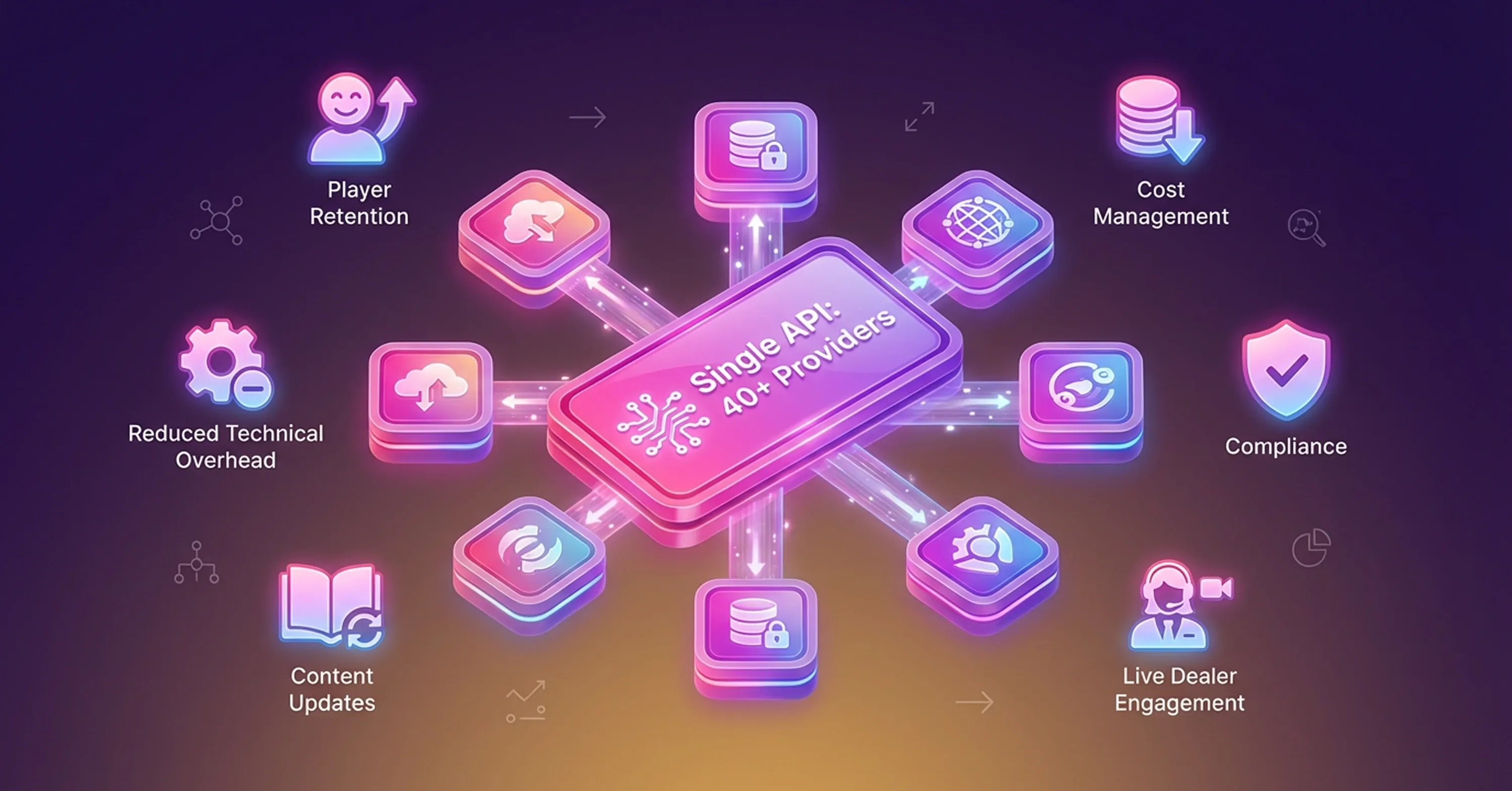
Modern online casinos rely on aggregation systems to deliver a wide variety of games without the complexity of managing multiple direct integrations. Instead of connecting to each provider individually, operators use a single API that centralizes content, streamlines updates, and ensures consistent performance across the platform. This approach reduces technical overhead while allowing casinos to scale their game libraries quickly and efficiently.
This setup typically includes several key capabilities that make large-scale content management possible:
-
NetEnt, Pragmatic Play, Evolution, and 40+ others under one API
-
Auto-updates so new releases appear without extra work
-
Differential RTP settings per jurisdiction
For a technical explanation of game aggregation, platform flexibility, and how to efficiently source thousands of popular titles, check How iGaming Software Providers Power Modern Online Casinos.
Live Casino and Skill Games
Live dealer tables play a critical role in driving player engagement by recreating the atmosphere of a real casino in a digital environment. They combine immersive visuals with real-time interaction, which helps build trust and keeps players engaged for longer sessions.
When evaluating live dealer solutions, operators should focus on several key features that directly impact user experience and retention:
-
HD streams, low latency, multilingual hosts
-
Side-bets and game shows that create social buzz
-
Scalable studios that can brand tables for VIPs
By selecting the right live dealer setup, operators can enhance player trust, increase session duration, and create a more immersive experience that supports long-term retention and revenue growth.
Negotiate Flexible Commercial Terms
Strong commercial agreements give operators the flexibility to manage costs while scaling efficiently. Instead of committing to rigid pricing structures, it is important to negotiate terms that align with both short-term performance and long-term growth objectives.
When structuring these agreements, operators should focus on a few key elements:
-
Blend fixed monthly fees with revenue share
-
Ask for promotional tools: free spins, tournaments, jackpots
-
Secure geo-blocks to comply with local content rules
A diverse lobby lowers churn and raises lifetime value, which offsets marketing costs.
Integrate Payment and Fraud Controls
Trust collapses if deposits fail or payouts stall.
Must-Have Processors
A well-rounded payment setup ensures that players can deposit and withdraw funds easily and confidently, regardless of their location or preferred method. Offering a diverse mix of payment options not only improves user experience but also increases conversion rates and retention by reducing friction at critical transaction points.
To achieve this, operators should include a balanced mix of the following payment solutions:
-
Cards (Visa, Mastercard, local schemes)
-
E-wallets (PayPal, Skrill)
-
Alternative payments (Pix in Brazil, UPI in India)
-
Crypto rails for fast, low-fee withdrawals
Modern operators should consider robust solutions that integrate multiple local and digital options, automated KYC, and fast withdrawals—see Smart Pay for an example of smooth, compliant payment stacks designed for online casinos.
Fraud, AML and Responsible Gaming Tools
A strong compliance and risk management framework protects both the operator and the players while ensuring adherence to regulatory requirements. By implementing proactive controls, casinos can prevent fraud, promote responsible gaming, and maintain long-term trust with their user base.
To support this, operators should incorporate several essential safeguards:
-
KYC checks during registration and first cashout
-
Real-time transaction monitoring with velocity alerts
-
Self-exclusion portals and deposit limits
Industry consultant Alex Rhodes notes that operators lean on tech to “protect their business”; the right payment stack is ground zero for that protection. Integrating multiple gateways raises approval rates and player confidence, two pillars of sustainable growth.
Build a Sticky Brand: UX, Mobile, CRM
The platform is only half the job; player experience keeps lights on. A strong brand is built through seamless usability, personalized engagement, and responsible design that keeps players returning over time.
Mobile-First Design
With the majority of users playing on mobile devices, operators must prioritize intuitive and responsive design that supports fast, frictionless interaction.
Key elements of an effective mobile experience include:
-
Adaptive layouts for vertical play
-
Quick-filter game categories and search
-
One-handed navigation for live bets
Data-Driven CRM
Retention depends on how well operators understand and respond to player behavior. Data-driven CRM systems allow for personalized communication and targeted engagement across multiple channels.
To achieve this, operators should focus on:
-
Automated email, SMS, and push journeys
-
On-site personalization: game carousels adjust to taste
-
Tiered loyalty with cash, merch, and event invites
Most lasting casino brands rely on advanced segmentation and loyalty tools—platforms like Smart CRM offer data-driven player analytics, flexible automation, and powerful retention features.
Responsible Gaming as a Feature
Responsible gaming is not just a regulatory requirement but a core part of building long-term trust and brand credibility. Integrating these features into the user experience helps protect players while strengthening brand reputation.
Operators should include:
Remember, as AGA CEO Bill Miller said, Americans embraced diverse legal gaming choices in 2024. Your brand must be the most comfortable choice.
Launch, Promote, and Optimize
The final stage separates hobby projects from money-making brands.
Marketing Channels that work
Successful casino marketing relies on a diversified channel mix that balances acquisition costs with long-term player value. By combining performance-driven strategies with brand exposure, operators can reach new audiences while maximizing return on investment.
To achieve consistent growth, operators should focus on the following channels:
-
Affiliate networks: pay only on delivered revenue
-
Influencer streams: Twitch, Kick, YouTube
-
PPC: Google, Facebook (local laws permitting)
-
Retargeting: remind abandoners of ongoing jackpots
A well-executed multi-channel strategy ensures steady traffic, improves conversion rates, and keeps players engaged beyond their first interaction. For a practitioner’s roadmap spanning KPIs, launch checklists, and the marketing cycles that retain players, see How to Start an Open Online Casino in 2026.
KPI Checklist
Tracking the right performance metrics allows operators to understand profitability, identify risks, and optimize their marketing and retention strategies. A clear KPI framework ensures that decisions are based on data rather than assumptions.
To maintain a healthy and scalable operation, operators should monitor the following key indicators:
-
Cost per acquisition (CPA) vs lifetime value (LTV)
-
Active player days per month
-
Net gaming revenue per segment
-
Chargeback and fraud ratio
Consistently reviewing these KPIs helps operators improve efficiency, reduce losses, and drive sustainable growth over time. Treat launch as a beta. Measure, tweak, and invest only in channels that beat your target CPA.
Conclusion
Starting an online casino is no longer reserved for deep-pocketed giants. By validating demand, choosing a license carefully, and leveraging a turnkey casino platform or white label partnership, you can reduce legal, technical, and financial risk. Keep payments smooth, games fresh, and marketing data-driven, and you will give yourself the best shot at joining the next wave of operators riding record revenues.