futuristic digital vault in a high-tech data center surrounded by glowing analytics dashboards and financial data visualizations

Reporting and Analytics Features for Casino Platforms

Running an online casino without clear reporting is like playing blackjack blindfolded. Operators need hard numbers on players, profit, and promotions, or the house will never win in the long run.

Content authorBy Mkrtumyan GagikPublished onReading time7 min read

Overview

This article breaks down the most valuable reporting and analytics features you should expect inside a modern casino platform. We will look at real-world examples, quick case studies, and the KPIs you can surface with each tool. By the end, you will know exactly which dashboards and data streams separate first-class casino software from the rest.

What Are Casino Reporting and Analytics Features?

Casino reporting and analytics features are built-in or integrated tools that track player behavior, financial transactions, bonus performance, and operational health. They include real-time dashboards, cohort analysis, fraud alerts, segmentation engines, and visual profit and loss reports so operators can make data-backed decisions fast.

1. Real-Time Transaction Monitoring

Even a five-minute delay can hide a suspicious betting pattern. Real-time monitors refresh the ledger instantly, highlighting anomalies before they grow into chargebacks or bonus abuse.

Key capabilities include:

  • Live feed of deposits, withdrawals, and wagers

  • Color-coded alerts when volumes spike outside normal ranges

  • User-selectable columns and filters for quick deep dives

For an in-depth review of backend tools designed for real-time risk management, read How iGaming Software Providers Power Modern Online Casinos. These systems are essential for detecting fraud, money laundering, or problem gambling as they happen.

Case in Point: EveryMatrix

Their Transaction Monitor offers auto-refresh as often as every five seconds and lets staff rearrange 40 custom data columns in seconds, a feature showcased in “Challenge 4: The impact of reporting options on operators’ operations”.

This lightning pace means fraud analysts can freeze an account before a single extra spin occurs. Once real-time data is in play, the next sections become more powerful because they feed on the same live stream.

2. Player Behavior Cohort Analysis

Understanding how different player groups act over time turns raw logs into insights.

Core features include:

  • Auto-create cohorts by first deposit date, country, or acquisition channel

  • Track retention, lifetime value, and average bet size by cohort

  • Visual funnels that expose where new sign-ups drop out

If you want advanced segmentation and real-time BI dashboard integration for proactive retention, platforms like Launching a White Label Casino: Everything You Need to Know offer modern CRM and analytics modules.

Smartbet LLC clients often create a “high-roller in first 30 days” segment then use the back-office to watch daily net revenue, adjusting VIP perks proactively. A small tweak like doubling daily free-spin caps can raise weekly revenue 8% in that slice alone. Solid cohort tools end the section by linking behavior to revenue, teeing up the next feature: financial reporting.

3. Multi-Currency Financial Reporting

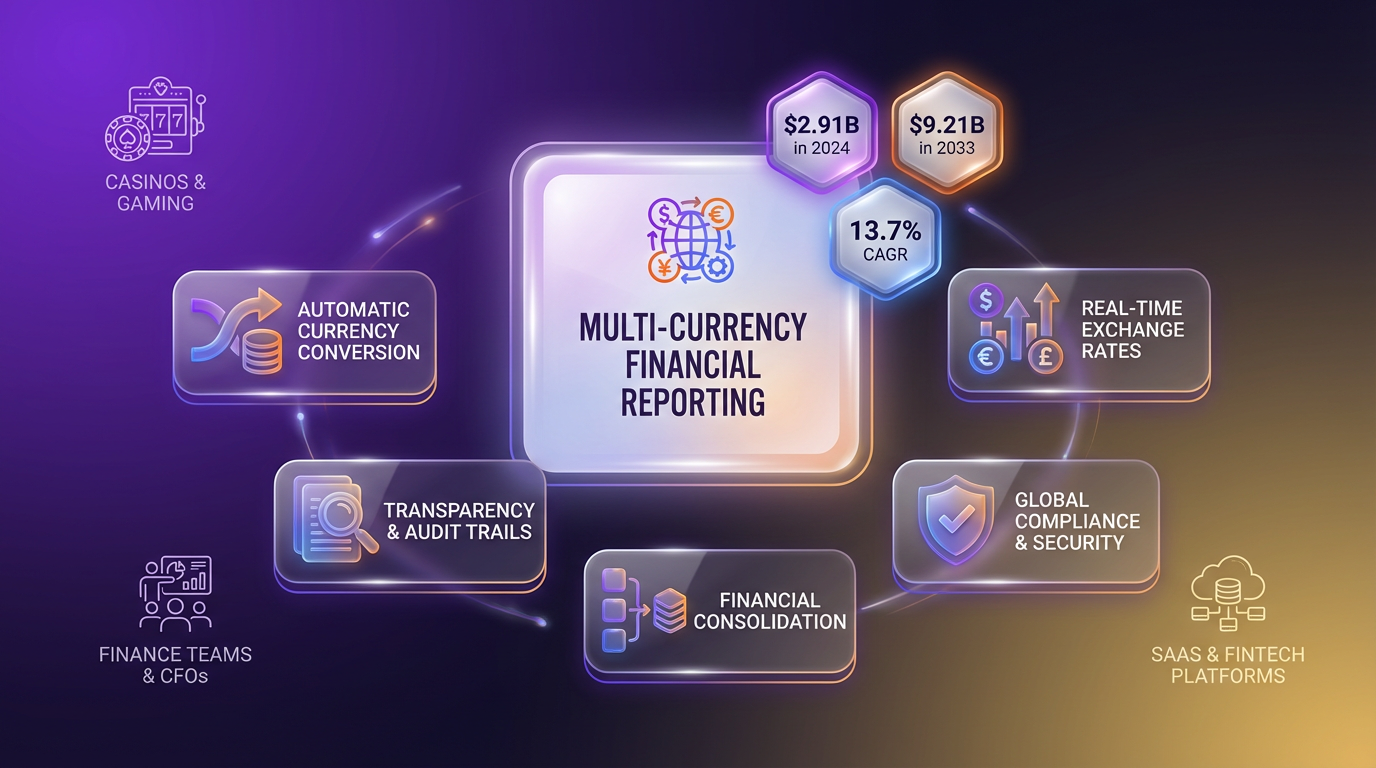
A vibrant 3D marketing visual featuring a central card for 'Multi-Currency Financial Reporting' surrounded by smaller finance-related icons.

A casino may accept EUR, USD, BTC, and more. Consolidating those numbers into one clear P&L keeps finance teams sane.

Key capabilities include:

  • Automatic conversion using daily spot rates

  • Separate wallets inside one report for transparency

  • Drill down from macro profit to single player contribution

For a deep dive into software solutions that handle real-time exchange rates, compliance, and transparent ledgers, explore Top Platforms for Multi-Currency Online Casinos.

The global market for casino analytics hit $2.91 billion in 2024 and is projected to reach about $9.21 billion by 2033 at a 13.7 % CAGR. Any platform that fails to provide polished financial views will be left behind as that market expands.

4. Bonus and Campaign Performance Dashboards

Marketing teams spend heavily on free spins, match deposits, and cashback. Reporting must show whether those perks drive retention or just cannibalize revenue.

A strong bonus reporting system should provide:

  • Side-by-side ROI comparisons of concurrent campaigns

  • Automatic tagging of players tied to each bonus code

  • Cancellation and breakage rates highlighted in red

Solutions such as Smart Bonus System equip operators with advanced, real-time tools for designing custom rewards, automating bonus enforcement, and tracking campaign performance.

Mini-Study: Weekend Reload vs. Weekday Cashback

One Scandinavian operator split its database and offered a 50 % weekend reload to Group A and a 10 % weekday cashback to Group B. The dashboard revealed Group A deposited 23 % more within 48 hours but net revenue only rose 3 % due to bonus cost. Group B produced a 9 % revenue lift with lower risk. By week two, the reload offer was shelved. Good reporting paid for itself in days.

The takeaway: dashboards that translate marketing spend into net revenue protect margins and keep the next feature, risk management, under control.

5. Automated Fraud and Risk Alerts

With thousands of transactions per hour, manual checks are impossible. Risk engines watching the data lake keep the platform compliant and secure.

Key capabilities include:

  • Velocity checks: flag 3+ credit card failures in 5 minutes

  • Geo-IP vs. registered address mismatch alerts

  • Pattern recognition for bonus abuse or collusion at tables

For a comprehensive solution focused on sportsbook and casino fraud prevention, see Risk Management. Automated monitoring and real-time alerts are fundamental to protecting both platform and players.

Operators can set thresholds inside the dashboard, ensuring alerts land via email, SMS, or Slack. This integration lets small compliance teams act like big ones, freeing resources for customer service.

6. Customizable Operator Dashboards

Not every role needs the same graphs. A CFO may track hold percentage, while a CRM manager watches churn risk.

A flexible reporting system should provide:

  • Drag-and-drop widgets and color themes

  • Save multiple layouts: Finance, Marketing, Support

  • Schedule PDF or CSV exports to hit inboxes each morning

Platforms such as Smartbet LLC include widget libraries pre-tuned for iGaming, cutting setup time to minutes. Custom dashboards personalize data intake, lowering cognitive load and leading smoothly to deeper analytics.

7. API Access for External BI Tools

Some operators prefer Tableau, Power BI, or in-house data warehouses.

Key integration features include:

  • REST or GraphQL endpoints for raw or aggregated data

  • Token-based authentication with role scopes

  • Webhook support for real-time pushes when events fire

When a casino’s bonus triggers a webhook, a warehouse can update predictive churn models instantly. This open architecture avoids data silos and keeps the operation future proof.

8. AI-Driven Predictive Models

Moving beyond historical views, AI spots patterns humans miss.

Key applications include:

  • Churn prediction: flag players likely to drop after 7 days of silence

  • Bet size forecasting for VIP managers

  • Dynamic odds or RTP tweaks to protect margin

These predictive tools help operators make faster decisions, improve retention, and optimize profitability before trends become visible through traditional reporting.

Case-Study: Predicting Slot Fatigue

An Asian mobile casino fed 18 months of spin data into its AI module. The model signaled slot fatigue two sessions before players typically moved to competitors. Sending a personalized cross-sell offer to live roulette retained 12 % of that at-risk group, worth an extra $140,000 quarterly.

AI models rely on clean feeds from earlier features, proving that solid foundations are indispensable.

9. Regulatory and Tax Compliance Reports

Audit requests come without warning. Instant, tamper-proof logs avoid penalties.

Key capabilities include:

  • One-click creation of country-specific tax forms

  • Immutable hash stored on blockchain or secure ledger

  • Time-stamped logs of KYC and AML actions

If you need a real-world implementation checklist, including compliance, payment, and reporting integration, reference Choosing the Right Online Casino Platform for Your Business. Leading software simplifies regulatory tasks with automated, transparent reports.

When Swedish authorities asked a mid-tier operator for six months of player statements, automated compliance reports delivered a complete file in under ten minutes, sidestepping a potential €10,000 fine.

Regulatory peace of mind lets management focus on growth instead of paperwork.

Conclusion

Reporting and analytics features for casino platforms decide whether an operator runs on facts or guesses. Live transaction monitors, cohort tools, multi-currency ledgers, bonus dashboards, fraud alerts, custom views, open APIs, AI models, and compliance reports form a layered system. Together, they protect margin, please regulators, and keep players engaged. Equip your casino with these nine pillars, and the house edge will show up in the balance sheet every single day.

Real-time reporting surfaces fraud, payment problems, and VIP spikes as they happen. Acting in the moment prevents lost revenue and safeguards player trust.

Key daily metrics include gross gaming revenue, active players, average bet size, deposit-to-withdrawal ratio, and bonus cost versus ROI. Monitoring these figures keeps operations healthy.

Yes. Many white-label providers bundle powerful dashboards into entry-level plans. Open APIs also let you start small with Google Sheets or free BI tools, then scale later.

Behavioral reports flag session length, rapid deposits, and loss patterns. Support teams can intervene early with cooling-off messages or mandatory limits, promoting safer play.

AI can pre-screen transactions and players, but final compliance decisions should remain with trained staff. Treat AI as a support tool, not a legal authority.

Schedule a Meeting

Book a time that works best for you and let's discuss your project needs.