Overview
The sections below map the landscape, compare feature sets, and share quick wins from brands that already scaled fast. By the end, you will know which platform model fits your growth plan, the metrics to check, and the pitfalls to dodge.
What is an Online Gambling Platform?
An online gambling platform is the software backbone that lets an operator run betting sites with casino and live dealer content. It integrates player accounts, wallets, sportsbook feeds, real money games, payment gateways, and compliance tools behind a single back office, allowing brands to launch, manage, and scale iGaming operations across multiple jurisdictions.
Why Platform Choice matters?
Online gambling revenue keeps smashing records. Western Europe alone generated USD 32.1 billion in 2023, or 36.2 % of global turnover. Worldwide, the market is forecast to hit USD 169.2 billion by 2030, growing at 10.44 % a year.
A solid technology stack lets an operator ride this wave, not sink under traffic spikes or compliance audits. Next, we unpack how the main platform models work and when each makes sense. To see all-in-one examples, explore Smart Platform, an integrated system for casino and sportsbook operators.
Understanding core platform models

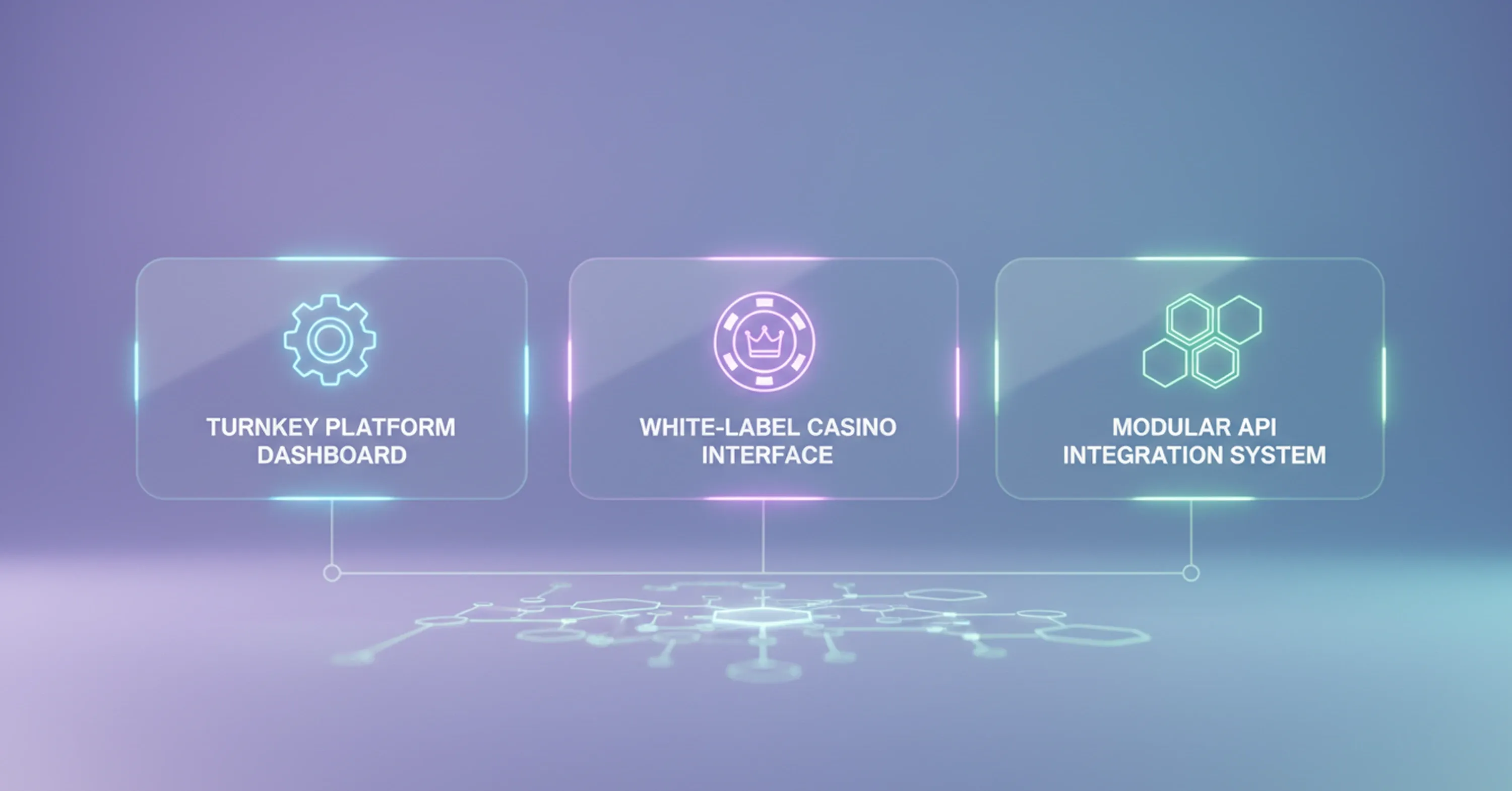
An online gambling platform glues together game content, risk management, user wallets, marketing tools, and reporting dashboards. Operators usually pick among three models.
1. Turnkey solutions
A turnkey provider delivers a ready-made site bundled with the full back-office stack, allowing operators to launch quickly without building or integrating core systems themselves. The platform comes preconfigured with the essential technology, compliance tools, and operational workflows needed to run an online gaming business, so you can focus on brand positioning, market entry, and growth rather than infrastructure.
Typically included:
-
Pre-integrated sportsbook, slots, table games, and live dealer content
-
A universal wallet that lets players move seamlessly between real-money games
-
Built-in KYC, fraud prevention, and multi-currency payment processing
-
Customizable front-end themes you can adapt without touching code
Pros: fastest time to market, single vendor contract. Cons: limited UI flexibility, and revenue share can quietly climb past 30%.
For fast implementation and multi-region support, review the strengths of a modern Turnkey platform.
2. White-label platforms
By contrast, white-label agreements go one layer deeper. Instead of just supplying the technology, the provider operates under its own licence and takes responsibility for regulatory compliance, payments, and reporting, while you concentrate on brand, traffic, and player acquisition.
This model is especially useful when:
-
You’re a startup testing a tightly regulated market before committing long term
-
You want significantly lower upfront costs than applying for and maintaining your own licence
-
You benefit from shared advantages like pooled progressive jackpots and network-wide promotions
The trade-off is reduced operational control, but for early-stage launches or new jurisdictions, white-label setups can dramatically cut time, risk, and capital exposure. The trade-off is brand control: you cannot migrate players easily if you outgrow the deal. If this route fits your launch plan, learn more about White Label solutions and their benefits for new operators.
3. Modular or API-first stacks
As scale and ambition grow, many operators graduate beyond all-in-one solutions. Established brands often migrate to modular stacks that let them plug in additional betting sites, casino verticals, third-party KYC vendors, or fully bespoke front-end applications, without being locked into a single supplier.
This approach typically offers:
-
APIs for account management, wallets, odds feeds, and responsible gaming
-
The freedom to add or swap game studios and payment gateways as strategy evolves
-
Higher technical overhead upfront, but stronger long-term margins and control
Choosing the right model ultimately hinges on budget, target markets, and internal technical capability. Up next, we’ll break down the essential features every operator should benchmark before committing to a platform.
Essential features operators should benchmark
A feature checklist keeps platform evaluations disciplined and comparable, especially when vendors bundle overlapping capabilities under different labels. By scoring each solution against the same criteria, operators can cut through marketing noise, surface deal-breakers early, and keep short-lists focused on what actually impacts launch speed, compliance, and profitability.
At a minimum, operators should benchmark the following areas:
-
Licensing coverage: Does the platform hold or support licences in your key jurisdictions?
-
Sportsbook depth: pre-match, live betting, virtual sports, and a flexible margin engine
-
Casino aggregation: seamless access to 5 000+ slots, live tables, and crash games from multiple providers
-
Real-time risk management: velocity checks, bet limits, and automated trading
-
Payment hub: over 150 methods, on-ramp for crypto, instant withdrawals
-
Marketing suite: segmentation, retention triggers, and personalised bonusing
-
Mobile UX: 58 % of European online GGR in 2024 came from mobile play
-
Compliance toolkit: GDPR, AML, self-exclusion, and detailed audit logs
-
Data access: open reports, raw feeds for BI tools, and event webhooks
Operators that score each vendor on the same sheet spot gaps early, align stakeholders faster, and avoid costly rebuilds once the platform is live.
Sportsbook integration: from odds feed to cash-out
Sports betting revenue is climbing faster than any other vertical. The American Gaming Association reports USD 13.71 billion in U.S. sports betting revenue for 2024, up 25.4 % year-on-year. A platform’s sportsbook module should therefore be watertight.
Key sportsbook modules
A modern sportsbook is built from multiple specialised components that work together to price markets accurately, manage risk in real time, and deliver a responsive betting experience to players. Evaluating these modules individually helps operators understand where platforms truly differentiate, whether through sharper margins, faster live betting, or greater control for trading teams.
Core sportsbook modules typically include:
-
Odds provider aggregation to secure competitive margins
-
Live data streams with latency below 2 seconds
-
Custom bet builder for parlays and same-game combos
-
Cash-out and partial cash-out with real-time settlement
-
Trader console to tweak margins per sport, league, or customer segment
Sportsbook margins live on razor-thin percentages. A console that automates line changes and flags exposure saves a trading team hours each matchday. Modern technology such as Smart Sports enables operators to implement competitive, feature-rich sportsbook offerings quickly.
Case study: scaling live betting in the U.K.
Ahead of the 2024 Premier League run-in, a mid-tier operator replaced its incumbent odds supplier with a modular odds feed to improve live coverage and execution speed.
Result:
-
Live markets increased from 12 k to 38 k events per month
-
Bet acceptance time dropped from 5.1 s to 1.8 s
-
UK online real-event betting GGY for the operator grew 34 % versus market growth of 38 %
The lesson is simple. Rich live markets and fast acceptance win repeat bettors.
Casino and live dealer games: depth over volume
Casino games generated 51 % of EGBA members’ online revenue in 2024, more than sportsbook and poker combined. Therefore, a platform must excel at game aggregation.
Multi-provider aggregation
Modern casino back ends are designed as aggregation layers, connecting operators to 70+ game studios through a single API while handling content distribution, compliance logic, and ongoing updates behind the scenes.
In practice, this setup enables:
-
Instant access to branded slots, Megaways mechanics, and networked jackpots
-
Automatic game certification checks and availability rules per market
-
Centralised RTP and volatility data that marketing teams can use for targeting and campaign planning
An operator can launch new real money games weekly without fresh paperwork. For a real-life example of game diversity, see Smart Casino, which integrates over 10,000 casino titles from leading studios.
Live casino must-haves
Live casino has evolved from a niche add-on into a core revenue driver, combining real-time video, interactive mechanics, and television-style production values to replicate, and often outperform, the land-based experience online.
Key capabilities typically include:
-
HD streams that automatically adjust to mobile data speeds
-
Game shows such as Crazy Time and Monopoly Live
-
Dedicated tables with your branding and native-language dealers
-
Configurable side bets designed to lift margins and session length
If you're aiming to stand out with live dealer content, platforms like Smart Live support branded tables and multilingual hosts, boosting session length and retention.
Case study: regionalised live casino in Germany
A German-focused site added native-speaking blackjack tables through its platform’s live casino API. Within three months, average session length jumped 22 % and churn fell by 11 %. These gains illustrate how cultural fit beats plain game volume.
Payment processing: friction kills conversion
A flashy lobby means nothing if players cannot deposit. Platforms should embed a payment hub that supports local favourites and accepts small stakes.
At a minimum, this requires:
-
Card, e-wallet, open banking, prepaid vouchers, and crypto
-
Smart cashier that surfaces the top three options per region
-
One-click repeat deposits and automated KYC triggers
-
Withdrawal automation with fraud scoring, so 80 % of requests exit in under 15 minutes
Fast pay-outs build trust, reduce tickets, and turn new sign-ups into loyal bettors. For platforms seeking flexibility and modern options, Crypto Casino solutions support digital currencies and fast processing to boost player engagement.
White-label vs own licence: decision checklist
White-label platforms trade control for speed and regulatory cover. They work best when the priority is fast market entry rather than long-term platform ownership.
Use this quick scorecard:
-
Licensing complexity: high → choose white-label; low → consider your own licence
-
Budget: under USD 150k → white-label is usually the better fit
-
Brand strategy: multiple sub-brands or VIP clubs → own licence offers more flexibility
-
Exit horizon: planning to exit within four years → ownership avoids costly migrations
A hybrid approach is possible: launch on a white-label contract, then negotiate code rights or a migration path once KPIs hit target.
Tech stack checklist for 2026 and beyond
To stay future-proof, operators should validate that shortlisted vendors already support, or have credible roadmaps for, the next wave of platform requirements. These capabilities are fast becoming table stakes rather than nice-to-haves.
In particular, this includes:
-
Pay-by-bank API support aligned with the EU’s PSD3 draft
-
Embedded player-protection widgets for self-assessment, limits, and cooling-off
-
AI-driven churn prediction with real-time activation in CRM tools
-
Multi-tenant, containerised architecture to spin up regional clones with minimal effort
-
WebRTC support for low-latency, in-game video streaming
-
Open data connectors for Snowflake, BigQuery, or similar BI stacks
Locking these in early helps avoid costly re-platforming and rushed rebuilds two years down the line.
Putting it all together: migration roadmap
Thinking of switching platforms? Breaking the migration into clear phases helps reduce risk, protect revenue, and keep players unaffected.
1. Discovery
-
Map all existing data sources, including players, wallets, bonuses, and KYC records
-
Identify functional or commercial gaps the new vendor must close
2. Contracting and sandbox testing
3. Dual run
4. Full Cutover
-
Communicate timelines clearly, migrate balances overnight, and freeze bonuses
-
Monitor core KPIs closely for 30 days post-migration
A phased approach like this minimizes downtime, limits operational surprises, and reduces player frustration during the switch.
Conclusion
Choosing the right online gambling platforms shapes your profit curve more than any single marketing campaign. Evaluate licensing needs, sportsbook depth, game aggregation, and payment coverage with a structured scorecard.
Whether you start on a white-label deal or build a modular stack from day one, focus on flexibility, mobile performance, and transparent data. These pillars let your iGaming business scale smoothly as new markets open and player expectations climb.