What You’ll Learn
Below is a step-by-step playbook that shows operators exactly how to integrate multiple game providers into a single platform while keeping costs, tech debt, and headaches low. We will map the entire journey from choosing an aggregation strategy to launching new content without downtime. You will see real numbers from top platforms like CasinoEngine, SoftSwiss, Slotegrator, and Hub88, and you will walk away with a checklist you can follow today.
A single API integration lets operators keep wallets, bonuses, and reporting in one place, cut launch times by up to 70 %, and offer thousands of slots, tables, and live feeds from day one. For a deeper dive into how a single API approach simplifies content management and integration, explore How iGaming Software Providers Power Modern Online Casinos.
How Do You Integrate Multiple Game Providers Into One Casino Platform?
Integrating multiple game providers into one platform involves seven steps: decide on aggregator vs. direct, short-list suppliers, negotiate terms, map technical touchpoints, sandbox test, stage a phased launch, and run continual optimisation. This flow delivers thousands of titles through a single API, unified reporting, and a smoother player experience.
1. Decide on Direct Integrations vs. a Game Aggregator
Choosing the right model at the start prevents expensive re-work later.
Direct integrations
-
Direct contracts with each studio
-
Full control of release dates
-
High maintenance load on your tech team
Game aggregators
Recent success stories back the aggregator route. CasinoEngine generated 62 billion game rounds between January and November 2024, equivalent to €64 billion in turnover, proving that centralising content can scale without breaking. For more context, see how industry leaders address the direct versus aggregator dilemma in Top Slot Providers Driving the Online Casino Industry.
As a rule of thumb, startups and mid-tier operators pick an aggregator for speed, while tier-one brands with deep tech teams might mix both. Define your budget, timeline, and control level now, then stick with that decision for at least one growth phase.
2. Short-List Aggregators That Fit Your Market and Roadmap
Different game aggregators vary significantly in content, licensing support, pricing, and technical capabilities. Comparing them side by side makes it easier to identify which option fits your current markets and future expansion plans.
The easiest way to evaluate them is to create a comparison matrix based on:
-
Number of games and content providers
-
Supported licenses and regulated markets, such as MGA, UKGC, Ontario, and Curaçao
-
Additional features, including jackpots, tournaments, and bonus tools
-
Reported uptime and platform stability
-
Pricing model, whether flat-fee, revenue share, or hybrid
Several leading providers illustrate how different these platforms can be:
Make sure the aggregator can support the jurisdictions you operate in today and plan to enter tomorrow.
End the section by ranking each candidate on a 0–5 score for compliance, cost, and content gap coverage. For a comprehensive checklist on platform selection and comparison, see Choosing the Right Online Casino Platform for Your Business.
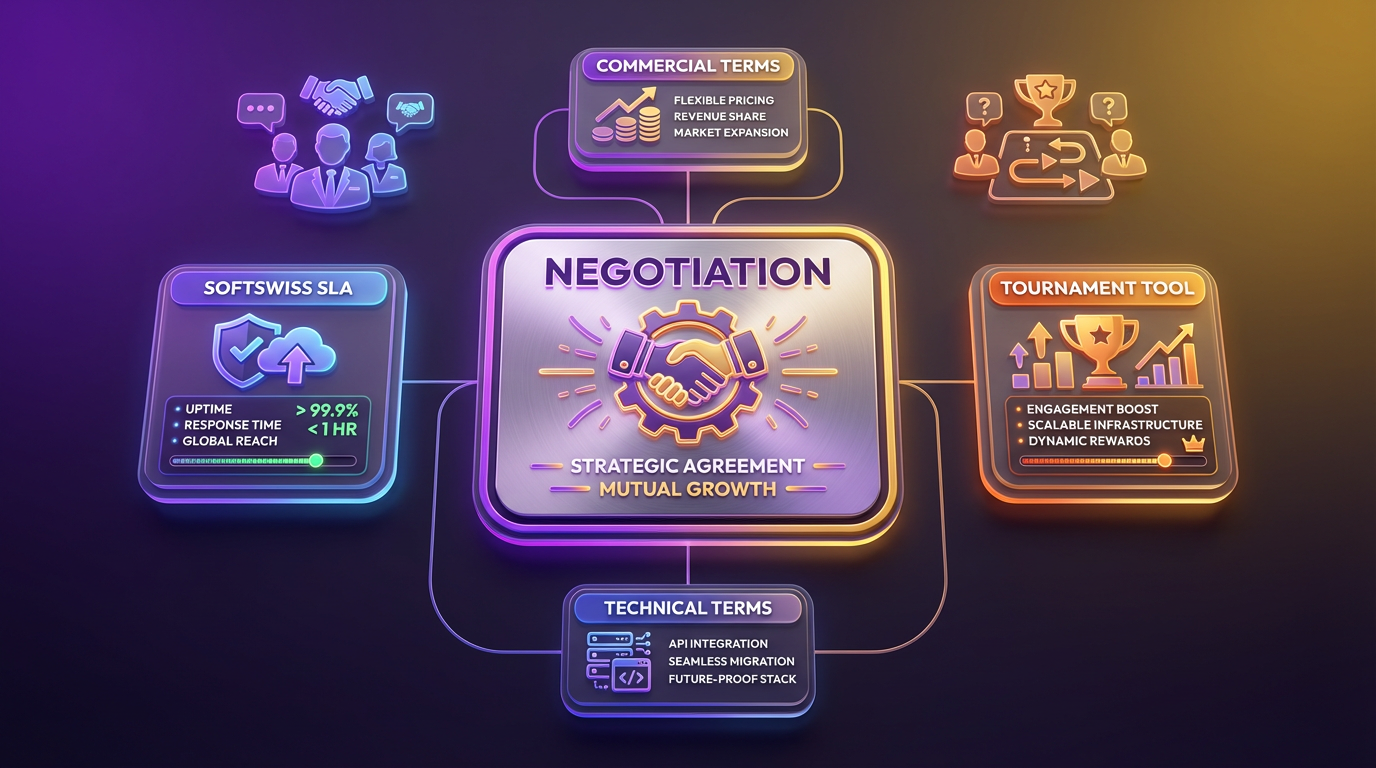
3. Negotiate Commercial and Technical Terms

With a short list in hand, move on to contract details. Even the best content loses value if margins vanish.
Items to lock down:
-
Revenue share or flat fee thresholds
-
SLA on uptime (SoftSwiss advertises 99.999 %–100 % uptime)
-
Data ownership and reporting frequency
-
Update cadence for new studios
-
Custom development hours included
Use benchmarks as leverage. When SoftSwiss says its Tournament Tool boosts daily bet volumes by 22 % and doubles bet counts, ask competitors whether they offer a similar lift. Conclude deals only when you have a clear view of cost per game round and upside in player value.
4. Map the Integration Touchpoints
A modern iGaming platform relies on several systems working together in real time. Wallet management, game delivery, player identity, bonuses, content, and reporting must stay synchronized to create a seamless experience for both players and operators. When one element fails to connect properly, the entire platform becomes harder to manage.
A complete integration blueprint should include:
-
Wallet and session management
-
Seamless game launches through URLs or iframe integration
-
Callback handling for bets, wins, cancellations, and rollbacks
-
Fraud detection and risk-management hooks
-
Bonus activation and free-spin or free-round triggers
-
Synchronization of game metadata, including RTP, volatility, and thumbnails
-
Back-office reporting and operational dashboards
Transition APIs are your friend. Companies like Smartbet LLC bake a “provider bridge” inside their turnkey platform so operators wire an aggregator once, then plug extra studios into that bridge with zero code. To see how robust API connections and modular architecture accelerate growth, read How to Start an Online Casino with Minimal Risk. The finishing step here is a technical scope document signed by both teams so no end-of-sprint surprises pop up.
5. Build and Test in a Sandbox First
Never test on production. All major aggregators give you staging credentials with fake balances.
Testing phases
-
Functional: spinning, payouts, session timeouts
-
Performance: high concurrency, cash-out loops
-
Security: SQL injection, callback endpoint spoofing
-
Compliance: game IDs match regulator catalog, jackpot odds logged
Real-world timeline
Use automated scripts to loop stress tests at 10× peak load. CasinoEngine reported €709 million GGR in Q3 2024, up 53 % YoY. That volume shows why load testing matters.
Wrap up testing with a sign-off checklist everyone can see: product, tech, compliance, and marketing.
6. Plan a Phased Go-Live
Going live is more than flipping a switch. You need change management.
Launch strategy options
-
Soft launch: one country, a subset of games, small budgets
-
Feature gating: open table games first, then slots, then live casino
-
Time-boxed: limited launch hours to monitor KPIs
In each phase track
After adding SoftSwiss’s Jackpot Aggregator, operators see campaigns double the average player turnover. Use similar promo mechanics during launch to grab attention and gauge stability.
The phased roll-out means you can pause, fix, and resume without risking your entire revenue stream.
7. Optimise, Report, and Keep Adding Value
Integration is not a “one and done” task. Weekly reviews keep the catalog fresh and profits rising.
Ongoing tasks
-
Monitor GGR per provider (CasinoEngine’s rolling 12-month GGR hit €2.6 billion, a 63 % YoY jump)
-
Rotate featured games in the lobby
-
Roll out new tools like tournaments or missions
-
Cross-sell sportsbook players to casino titles
Use dashboards in your aggregator or third-party BI to find under-performing titles and swap them out. Keep an eye on regulatory updates that might require disabling certain games. Finish every quarter with a joint review with your aggregator: discuss roadmaps, new studio signings, and upcoming compliance tweaks. To see practical platform and reporting setups that facilitate ongoing optimization, check Top Online Gambling Platforms to Expand Your iGaming Business.
Conclusion
Integrating multiple game providers into one platform does not have to be chaotic. Follow the seven steps above, lean on proven aggregators, and treat the project as an ongoing cycle rather than a one-off task. With the right blueprint, you gain a richer catalog, cleaner operations, and a player experience that keeps bankrolls — and profits — spinning.